Why Simplicity Wins: The Apple Marketing Commandments
[…]




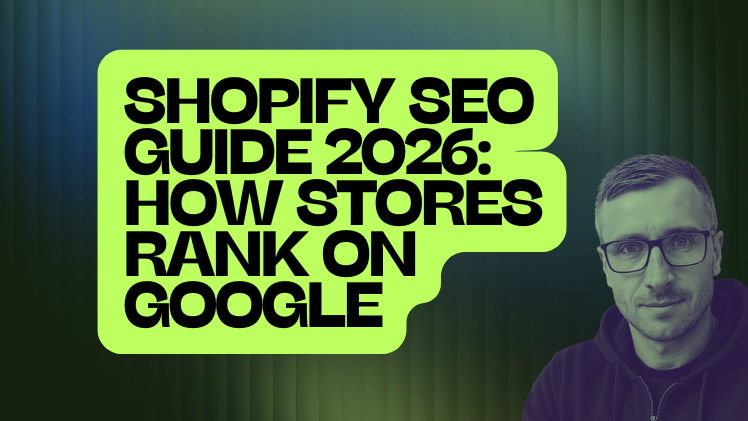
In 2026, Shopify stores rank on Google by combining technical crawl efficiency, clean information architecture, entity-rich content, and measurable commercial signals. Google’s AI Overviews reward stores that resolve user intent end-to-end, demonstrate real expertise, and validate performance with engagement, conversions, and brand trust—not tactics alone.
| Area | What Still Matters | What Changed in 2026 | Common Mistake |
|---|---|---|---|
| Technical SEO | Crawlability, speed, indexing | Server-side signals + render efficiency | Over-optimizing apps |
| Site Structure | Clear collections | Entity-first architecture | Flat, blog-heavy layouts |
| Content | Product & category depth | Use-case + comparison content | Thin AI product copy |
| Authority | Links | Brand mentions & demand | Link chasing |
| Measurement | Traffic | Assisted revenue & intent coverage | Vanity KPIs |
Google evaluates indexability, rendering efficiency, and intent alignment before content quality.
From what I see across Shopify Plus and SMB stores, rankings fail early when:
Pages render late or partially
Faceted URLs bloat crawl budgets
Collections compete with each other
Core priorities:
Server-side rendering (SSR) stability
Controlled URL parameters
Canonical discipline at scale
If Google can’t efficiently understand your store, content quality won’t save you.
Focus on restraint, not hacks.
High-impact technical wins:
Theme performance over app stacking
Strict indexation rules (collections, tags, filters)
Image delivery via native Shopify CDN
Schema that matches commercial intent
Decision rule:
If an app creates URLs, scripts, or duplicate content, it must justify its existence with revenue.
The best-performing stores use entity-driven hierarchy, not blog-first layouts.
Winning structure:
Homepage → Collections (primary entities)
Collections → Sub-collections (modifiers)
Sub-collections → Products
Blog → Supports collections (not the other way around)
Example:
“Running Shoes” → “Trail Running Shoes” → Product
Not: Blog → Internal links → Products
This mirrors how Google builds entity relationships.
Depth of decision support, not word count.
High-performing product pages include:
Use-case sections (who it’s for / not for)
Comparison blocks (vs alternatives)
Real-world FAQs pulled from support tickets
Post-purchase guidance (care, lifespan, sizing)
AI Overviews prefer pages that complete the buying thought process.
By acting like category explainers, not link hubs.
Effective collection content includes:
A clear category definition
Selection criteria (how to choose)
Internal comparisons (good/better/best)
Commercial constraints (price, fit, delivery)
If your collection copy sounds like marketing, it won’t rank.
Yes—but only when they support commercial intent.
I rarely see standalone blog posts rank long-term unless they:
Answer pre-purchase questions
Reduce buyer hesitation
Feed internal links into collections
Content that works in 2026:
“X vs Y” comparisons
Buying guides tied to collections
Objection-handling content
Brand demand and implied authority.
In practice, Google rewards:
Branded searches
Mentions without links
Consistent product naming
Cross-platform recognition
Links still matter—but they’re no longer sufficient on their own.
Leading indicators (early signals):
Crawl efficiency
Indexed page quality ratio
Engagement on collection pages
Assisted conversions
Lagging indicators (outcomes):
Revenue from organic
Branded search growth
AI Overview visibility
If you only report traffic, you’re flying blind.
After years working inside Shopify ecosystems, a few truths stand out:
Most ranking drops come from theme or app changes, not algorithm updates
Collections outperform blogs in both traffic and revenue
Over-filtering kills crawl budgets fast
The best SEO gains come from deleting pages, not adding them
The hardest SEO decision is often what not to publish.
Does Shopify have SEO limitations in 2026?
Yes, but most are structural, not fatal. Shopify rewards stores that simplify architecture and control indexation aggressively.
Are apps bad for Shopify SEO?
No—uncontrolled apps are. Any app that adds scripts or URLs must earn its keep.
How long does Shopify SEO take to work?
Expect 3–6 months for meaningful traction when technical foundations are clean.
Do AI-generated product descriptions rank?
Rarely—unless heavily edited for decision support and originality.
Should Shopify stores still build backlinks?
Yes, but prioritize brand mentions, PR, and partnerships over volume links.
What page type drives the most SEO revenue?
Collections—by a wide margin.
Is Shopify Plus better for SEO?
Only if you leverage its flexibility; Plus alone doesn’t guarantee rankings.