Why Simplicity Wins: The Apple Marketing Commandments
[…]




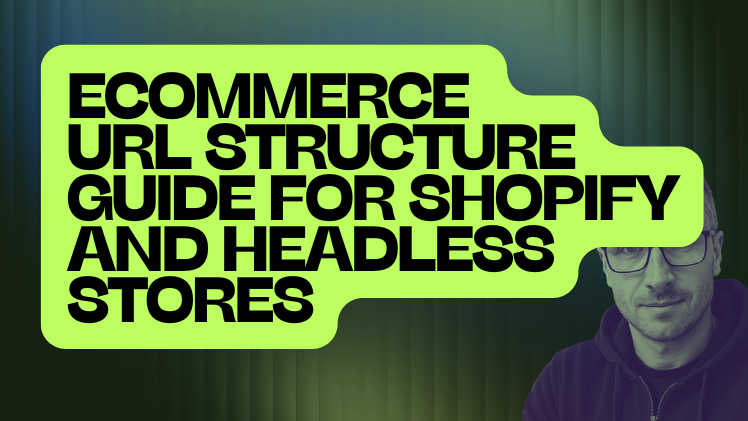
A strong ecommerce URL structure in 2026 prioritises clarity, consistency, and intent alignment for both users and search engines. The best-performing Shopify and headless stores use clean, hierarchical URLs that reflect product taxonomy, minimise duplication, and support SEO scalability, AI search understanding, and long-term growth.
| URL Layer | Purpose | Best Practice | Common Mistake |
|---|---|---|---|
| Homepage | Brand authority | Root domain only | Parameter clutter |
| Collections / Categories | Demand capture | Shallow hierarchy | Over-nesting |
| Products | Conversion | Stable, clean slugs | Variant URLs |
| Filters / Facets | UX support | Controlled indexing | Crawl traps |
| International | Market clarity | Consistent structure | Mixed signals |
URL structure determines how:
Search engines crawl and index your store
Authority flows through categories and products
AI systems understand page relationships
Users perceive trust and relevance
Search engines like Google increasingly reward predictable, semantic site architectures—especially for ecommerce.
Unlike content or links, URL structure:
Is hard to change later
Impacts every page
Creates long-term technical debt
Amplifies crawl inefficiency at scale
Fixing URLs after growth is painful. Designing them early is strategic.
A good URL is:
Human-readable
Keyword-aligned
Stable over time
Free of unnecessary parameters
Reflective of site structure
Example:
Bad URLs confuse both users and machines.
Rule of thumb:
Homepage → category → product
Maximum depth: 3–4 levels
Deeper URLs:
Dilute authority
Reduce crawl frequency
Increase latency for discovery
Flat structures scale better.
Yes—but with restraint.
Best practice:
One primary keyword
Natural language
Hyphens, not underscores
No stop-word stuffing
URLs are hints, not ranking silver bullets.
Shopify enforces:
/collections/ for categories
/products/ for products
Pros:
Consistency
Predictability
SEO-safe defaults
Cons:
Less flexibility
Forced URL paths
Duplicate collection paths
You must optimise within these constraints.
/collections/ or /products/?No.
Attempts to rewrite Shopify’s URL structure:
Create redirect chains
Break internal logic
Introduce crawl errors
Shopify URLs rank perfectly well when structured cleanly.
Best practices:
One primary collection per intent
Avoid collection nesting via URLs
Use internal linking for hierarchy
Keep collection slugs stable
Example:
Hierarchy should live in navigation and internal links, not URL depth.
On Shopify: no.
Shopify products live at:
This is fine for SEO because:
Products can belong to multiple collections
Category context is handled via internal links
Canonical URLs remain stable
Category paths in product URLs often create duplication.
Strong product slugs:
Use the primary product name
Avoid keyword repetition
Exclude variant attributes
Stay stable even if categorisation changes
Bad example:
Good example:
Variants belong in the page—not the URL.
URLs should not change with naming tweaks.
If a change is unavoidable:
Use a single 301 redirect
Update internal links
Avoid chains
URL stability protects accumulated authority.
Filters create:
Infinite URL combinations
Duplicate content
Crawl budget waste
Index bloat
Unchecked faceting can destroy large ecommerce sites.
Only index filters that:
Represent real search demand
Are stable and evergreen
Have unique value
Example:
Avoid indexing:
Sort orders
Price ranges
Session-based parameters
Minor attribute combinations
Best options:
noindex, follow
Parameter handling
JavaScript rendering
Canonicalisation to core pages
Control is more important than coverage.
Headless commerce removes platform constraints but:
Puts SEO responsibility on your team
Requires stronger governance
Makes mistakes easier to scale
Freedom without rules creates chaos.
Best-practice headless structure:
Mirrors traditional ecommerce hierarchy
Avoids API-driven parameter URLs
Separates content from logic
Maintains stable canonical paths
Headless does not mean experimental URLs.
Critical rules:
APIs must not expose crawlable URLs
Frontend routes must be canonical
No duplicate rendering paths
One URL = one intent
Search engines should only see one version of reality.
Preferred options:
Subfolders: /uk/, /de/
Country-language consistency
One market per URL space
Avoid:
Parameter-based country switching
Cookie-only localisation
Mixed language URLs
AI and search engines need explicit signals.
Rules:
One hreflang per indexable URL
Self-referencing hreflang
Exact URL matches
No redirects in hreflang targets
URL clarity underpins international visibility.
AI systems:
Infer hierarchy from URLs
Use slugs for entity understanding
Prefer predictable patterns
Struggle with parameter chaos
Clean URLs improve:
AI summarisation
Citation likelihood
Product understanding
Structure is a trust signal.
Avoid:
Excessive query strings
Auto-generated IDs
Inconsistent slugs
Multiple URLs for the same content
If AI can’t understand your structure, it won’t recommend it.
Audit checklist:
Index coverage by URL type
Duplicate URL patterns
Parameter crawl frequency
Canonical consistency
Internal link alignment
Redirect chains
Always audit before changing anything.
Safe rollout process:
Map old → new URLs
Implement 301 redirects
Update internal links
Monitor crawl and indexation
Validate rankings and traffic
URL migrations without planning destroy SEO.
Recommended:
Annually for mature stores
After major category changes
During platform migrations
When crawl issues appear
URL structure is infrastructure—not content.
Good URL structure improves:
Crawl efficiency
Indexation quality
Page discovery speed
Authority flow
Rankings follow structure—but indirectly.
Leading indicators:
Crawl stats by directory
Indexed URL quality
Faceted URL containment
Internal link depth
Lagging indicators:
Category-level ranking stability
Product discovery growth
Organic revenue scalability
Reduced technical debt
When URLs are right, SEO becomes easier everywhere else.
From real Shopify and headless audits:
Over-flexibility causes duplication
Filters destroy crawl budgets quietly
URL rewrites rarely help rankings
Stability beats theoretical optimisation
Structure is harder to fix later than content
The biggest mistake is thinking URL structure is a technical detail instead of a growth foundation.
Do URLs still matter for ecommerce SEO?
Yes—especially for crawl efficiency and AI understanding.
Are Shopify URLs bad for SEO?
No—Shopify URLs perform well when structured correctly.
Should product URLs include categories?
Usually no—this creates duplication.
How should faceted URLs be handled?
Index only high-intent filters; control the rest.
Does headless ecommerce need different URLs?
No—the same SEO principles apply.
Are short URLs better?
Clarity matters more than length.
Can changing URLs improve rankings?
Rarely—changes often carry more risk than reward.