Why Simplicity Wins: The Apple Marketing Commandments
[…]




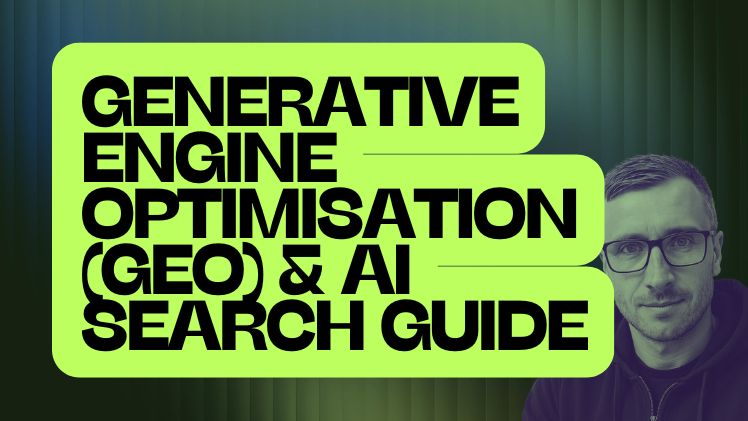
In 2026, Generative Engine Optimisation (GEO) is how ecommerce brands earn visibility inside AI-generated answers (Google AI Overviews, ChatGPT, Gemini). GEO works by structuring content for entity understanding, intent resolution, and decision support, not rankings alone—so AI systems confidently cite, summarize, and recommend your store.
| Area | Traditional SEO | GEO (2026) | Key Tradeoff |
|---|---|---|---|
| Primary Goal | Rank links | Appear in answers | Less click focus |
| Optimization Unit | Keywords | Entities + intents | Requires clarity |
| Content Style | Informational | Decision-complete | More depth |
| Authority Signal | Backlinks | Brand + usage signals | Slower to fake |
| Measurement | Traffic | Mentions + assisted revenue | Harder attribution |
Generative engines don’t rank pages—they synthesize answers.
From my work with ecommerce teams, the biggest misconception is thinking GEO is “SEO with new keywords.” It’s not.
Generative engines:
Aggregate multiple sources
Summarize consensus
Prefer clarity over cleverness
Select content that completes a task
If your content helps AI finish the user’s thought, you win visibility.
AI systems prioritize confidence and completeness, not novelty.
Core GEO signals I see repeatedly:
Clear entity definitions
Explicit comparisons and tradeoffs
Structured how-to logic
Consistent terminology across pages
Evidence of real-world usage
If AI has to guess what you mean, it won’t quote you.
Because ecommerce queries are decision-heavy.
AI search thrives on:
“Best X for Y”
“X vs Y”
“Is X worth it?”
“Alternatives to X”
If your store doesn’t answer these explicitly, AI will—using someone else’s content.
AI prefers entity-first structures, not blog sprawl.
Effective GEO structure:
Brand entity (About, Trust, Proof)
Category entities (collections, use cases)
Product entities (capabilities, limits)
Comparison entities (vs, alternatives)
Each page should exist to answer one decision, not many keywords.
It’s not dumbed down—it’s explicit.
High-performing GEO content includes:
Direct answers at the top
Clear section headers framed as questions
Lists that resolve steps or criteria
Language that mirrors how humans decide
I tell teams: write like you’re explaining to a smart buyer, not an algorithm.
Because comparisons reduce uncertainty.
Pages that dominate AI answers:
“X vs Y”
“Best X for Y”
“When to choose X instead of Y”
“Who should not buy X”
Most ecommerce sites avoid this out of fear. That’s a mistake.
Not descriptions—decision support.
Winning product pages include:
Explicit use cases
Who it’s for / not for
Pros, cons, and limits
Real FAQs from support or reviews
Post-purchase expectations
AI favors honesty over hype.
Yes—but they’re no longer decisive.
What matters more:
Brand demand (people asking about you)
Mentions across platforms
Consistent naming and positioning
Proof of real usage
GEO authority is about recognition, not manipulation.
In my testing, AI Overviews prefer pages that:
Answer quickly
Compare fairly
Cover edge cases
Don’t over-optimize language
Winning pattern:
Direct answer → explanation → examples → limits → next steps.
Because teams optimize formats, not outcomes.
Common failures:
Rewriting blogs with AI
Adding schema everywhere
Chasing “AI keywords”
Ignoring product and collection pages
GEO fails when content doesn’t help anyone decide.
This is the system I use:
Step-by-step GEO execution:
Identify high-value decisions users ask AI
Map each decision to a single page
Write content to fully resolve that decision
Add comparisons and constraints
Validate with engagement and mentions
One page, one resolved intent.
Leading indicators:
AI citations and mentions
Inclusion in AI Overviews
Engagement depth
Assisted conversions
Lagging indicators:
Brand search growth
Organic revenue influenced by AI
Direct traffic lift
Sales cycle reduction
If you only track traffic, GEO looks invisible.
After testing GEO across multiple ecommerce verticals:
Collections outperform blogs in AI visibility
Comparisons beat educational content
Being explicit beats being clever
Deleting vague content improves AI trust
AI prefers boring clarity over marketing flair
The biggest GEO unlock usually comes from simplifying language, not adding content.
Is GEO replacing SEO?
No. GEO builds on SEO but optimizes for answers, not links.
Does GEO require new tools?
No—clear structure and content matter more than software.
How long does GEO take to work?
Early visibility can appear in weeks; authority compounds over months.
Can small ecommerce brands win at GEO?
Yes—clarity and usefulness matter more than brand size.
Does schema guarantee AI visibility?
No. It helps comprehension, not selection.
Should I optimize blogs or products for GEO first?
Products and collections—always.
Is AI-generated content good for GEO?
Only if heavily edited for clarity, honesty, and decision support.